I-601A Provisional Waiver · Qualifying Relative Hardship · Florida
I-601A Provisional Waiver Psychological Evaluation
I am Najla Sallum, LCSW, Florida license SW19846. I provide psychological evaluations for I-601A provisional unlawful presence waivers, for legal review. I meet you at my Boca Raton office or by telehealth anywhere in Florida, in English, Portuguese, or Spanish. Reports are typically ready 7 to 14 days after the final interview.
When a provisional unlawful presence waiver turns on what a U.S. citizen or lawful permanent resident spouse or parent would go through, a clinical evaluation documents that reality for the reviewer. Conducted by Najla Sallum, LCSW, in English, Español, or Português, in Boca Raton or by secure video anywhere in Florida.
Quick facts
- Provider
- Najla Sallum, LCSW
- License
- Florida SW19846
- Location
- 9825 Marina Boulevard, Suite 500, Boca Raton, FL 33428
- Service area
- Florida only
- Languages
- English, Portuguese, Spanish
- Format
- In person or telehealth
- Typical turnaround
- 7 to 14 days after the final interview
- First step
- Free phone consultation, (754) 225-9819
- LCSW · Florida license SW19846
- 14+ years of clinical experience
- English · Español · Português
- Boca Raton or secure video, anywhere in Florida
- Free phone consultation
- Reports typically ready 7 to 14 days after the final interview
What this evaluation is for
Form I-601A, the Application for Provisional Unlawful Presence Waiver, is used by certain people who are in the United States, need to leave for an immigrant visa interview at a U.S. consulate, and would face a bar to returning because of unlawful presence. The provisional waiver lets USCIS decide the unlawful presence ground before the applicant departs. To approve it, USCIS must find that refusing admission would cause extreme hardship to a qualifying relative: a U.S. citizen or lawful permanent resident spouse or parent.
A psychological evaluation for an I-601A case is a clinical assessment of that qualifying relative. Najla interviews the spouse or parent, reviews the records your attorney shares, and writes a structured report on their mental health, their daily functioning, and what the clinical picture suggests about two futures: separation while the applicant waits abroad, and relocation if the family left together. The report documents; it does not argue the law.
Official guidance: USCIS Form I-601A page. Your attorney applies the legal standard to your circumstances.
What happens after you reach out
Najla reads it herself
Your call or message goes to Najla directly. She replies by the method you chose, typically within one business day.
A free phone consultation
Your questions answered in English, Español, or Português, a clear quote for your case, and appointment times offered. No obligation.
The interview, then the report
You meet in Boca Raton or by secure video anywhere in Florida. The written report is typically ready 7 to 14 days after the final interview, organized for your attorney's review.
Who is evaluated
- The qualifying relative: the U.S. citizen or lawful permanent resident spouse or parent of the applicant
- The applicant, when their circumstances shape the family's situation and your attorney asks for it
- Family members who prefer to speak in Español or Português, evaluated directly in that language with no interpreter
- Clients referred by immigration attorneys who need clinical documentation of hardship for a provisional waiver filing
What the evaluation may explore
- Emotional functioning: anxiety, depression, sleep, concentration, and how symptoms have changed under the uncertainty of the case
- What a period of separation would mean while the applicant attends the consular interview abroad: caregiving, income, parenting, and emotional support
- What relocation would mean: safety, medical care, work, schooling, language, and ties to the community
- Medical, caregiving, and financial circumstances that depend on the applicant staying in the household
- Personal history that shapes how this particular spouse or parent would absorb the loss
How the I-601A differs from the I-601
Both waivers use the same extreme hardship standard and the same definition of a qualifying relative for the unlawful presence ground. The difference is timing and place. The I-601 is generally filed after a finding of inadmissibility, often from abroad. The I-601A is filed from inside the United States, before the applicant leaves for the consular interview, so the family learns the decision on the unlawful presence ground before anyone departs.
For the clinical evaluation, that difference rarely changes the interview. The report still centers on the qualifying relative and documents the same two futures. What changes is often the deadline and the sequence of filings, which your attorney manages. Tell the practice at the first call whether the case is an I-601 or an I-601A, so the report is addressed to the right filing. USCIS publishes the eligibility rules on the official Form I-601A page; your attorney applies them to your case.
Why the applicant is usually not the person evaluated
This is the most common confusion in waiver cases. The legal question is about hardship to the qualifying relative, not to the applicant. So the spouse or parent who is a U.S. citizen or lawful permanent resident is the person who sits for the clinical interview. The applicant may also be interviewed briefly when that helps the clinical picture, and your attorney's referral says who should be seen.
If you are not sure who the qualifying relative is in your case, ask your attorney before scheduling, or raise it on the free consultation call and it is sorted out before anything is booked.
From free consultation to a written report
The free phone consultation confirms the case type, who will be evaluated, the preferred language, your location in Florida, and any filing deadline. Interviews generally take two to three hours and may be split across sessions. They take place in person in Boca Raton or by secure video from a private space anywhere in Florida. Written reports are typically completed within seven to fourteen days of the final interview and are delivered to you and, with your consent, your attorney.
The report is organized for legal review: history, clinical observations, symptoms, the hardship the assessment supports, and the connection between the findings and the referral question. It is written without advocacy language, so it holds up under a careful read.
Working with your attorney
When you have counsel, Najla coordinates directly with your attorney on the referral question, useful records, and timing. Provisional waiver cases often move on a consular schedule, so deadlines are discussed on the first call and planned around honestly.
Documents that may assist
- Any referral notes or document list from your attorney
- Medical or mental health records for the qualifying relative, when they exist
- Records that show how the household depends on the applicant: caregiving, work, or school
- Prior filings, declarations, or hardship letters your attorney wants considered
Nothing on this list is required before you reach out. Your attorney and the intake call will confirm exactly what applies in your situation.
What the evaluator does not decide
An evaluation documents clinical findings. It is honest, independent, and written for legal review. It is not a legal opinion, and it never promises an outcome.
- Whether the legal standard of extreme hardship is met. That decision belongs to USCIS.
- Whether the provisional waiver, or the immigrant visa that follows it, will be approved. No evaluation, and no evaluator, can promise an outcome.
- Eligibility, filing strategy, or whether the I-601A or the I-601 is the right form. Those are questions for your attorney.
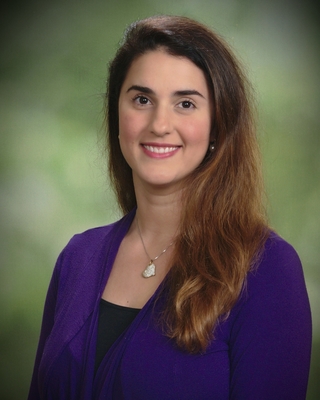
Meet your evaluator
Najla Sallum, LCSW
A Licensed Clinical Social Worker with more than fourteen years of clinical experience, Florida license SW19846. She works in English, Español, and Português, in person in Boca Raton or by secure video anywhere in Florida. Her reports are written for legal review and shared with your attorney only with your consent.
Not ready to book yet?
A free organizer for gathering the areas of family impact you may want to discuss.
Organize Potential Areas of ImpactCommon questions, answered
Straight answers before you book.
Who gets evaluated for an I-601A provisional waiver?
Usually the qualifying relative: the U.S. citizen or lawful permanent resident spouse or parent whose hardship USCIS considers. The applicant may also be interviewed when it helps the clinical picture. Your attorney's referral defines who should be seen.
Is a psychological evaluation required for the I-601A?
No. USCIS weighs many kinds of evidence. A clinical evaluation is one common way to document the emotional and practical effects on the qualifying relative, especially when those effects do not show up in medical records. Your attorney decides whether it fits your case.
What is the difference between an I-601 and an I-601A evaluation?
Clinically, very little. Both center on extreme hardship to a qualifying relative and document the same two futures, separation and relocation. The forms differ in when and where they are filed, which your attorney manages. Tell us which one applies so the report names the right filing.
How do you prove extreme hardship for I-601?
Through the whole record your attorney assembles: declarations, medical and financial records, country-condition evidence, and often a clinical evaluation of the qualifying relative. The evaluation documents the emotional, medical, caregiving, and practical effects the assessment supports. What counts as proof, and how much is enough, is a legal question for your attorney and a decision for USCIS.
What does USCIS consider extreme hardship?
USCIS publishes the factors it weighs in its official guidance, including family ties, health, financial, educational, and country conditions, looked at together rather than one at a time. The clinical evaluation speaks to the health and family-functioning side of that picture. Your attorney applies the standard to your case; the evaluator does not decide whether it is met.
How much does an immigration psychological evaluation cost?
The fee is confirmed on the free phone consultation, because it depends on the case type, the number of people interviewed, and the records involved. You hear a clear quote before anything is scheduled, and nothing is booked until you say so.
Does the evaluation guarantee the waiver is approved?
No. The evaluation documents clinical findings. USCIS decides the case, and no professional can promise how a report will be weighed.
Related pages
Other case types
- Asylum Psychological Evaluation
- Extreme-Hardship Psychological Evaluation
- VAWA Psychological Evaluation
- U Visa & T Visa Psychological Evaluations
- Cancellation of Removal Psychological Evaluation
- I-751 Abuse Waiver Psychological Evaluation
- En español: Evaluación Psicológica para Inmigración en Florida
- Em português: Avaliação Psicológica para Imigração na Flórida
Written and reviewed by Najla Sallum, LCSW (Florida license SW19846). Last reviewed: .