Boca Raton office · Video across Florida
Najla Sallum, LCSW
I am Najla Sallum, LCSW, Florida license SW19846. I provide psychological evaluations for immigration cases, for legal review. I meet you at my Boca Raton office or by telehealth anywhere in Florida, in English, Portuguese, or Spanish. Reports are typically ready 7 to 14 days after the final interview.
A Licensed Clinical Social Worker doing two things: therapy with adults, couples and families, and psychological evaluations for immigration cases. In English, Portuguese and Spanish.
Florida License SW19846 · Chapter 491, Florida Statutes
Messages come to me directly, and I answer within a business day.
Quick facts
- Provider
- Najla Sallum, LCSW
- License
- Florida SW19846
- Location
- 9825 Marina Boulevard, Suite 500, Boca Raton, FL 33428
- Service area
- Florida only
- Languages
- English, Portuguese, Spanish
- Format
- In person or telehealth
- Typical turnaround
- 7 to 14 days after the final interview
- First step
- Free phone consultation, (754) 225-9819
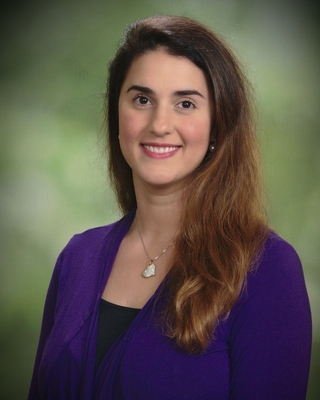
Who I am, professionally
I am a Licensed Clinical Social Worker in the State of Florida (licence SW19846). I have been in practice more than fourteen years. The work splits two ways: ongoing therapy with adults, couples and families, and written psychological evaluations for immigration attorneys and the people they represent.
I practise in English, Portuguese and Spanish, and I do not work through an interpreter. The interview, my thinking, and the report itself all happen in the language you are most fluent in. That is not a courtesy. An account given in a second language is thinner and reads as less credible, and both cost you.
My licence sits under Chapter 491 of the Florida Statutes. That covers therapy, clinical assessment, and evaluation written for legal and administrative proceedings. It does not cover psychological testing, ADHD testing, or autism diagnostic testing, which Chapter 490 reserves for licensed psychologists. If your case needs testing, I will say so and send you to someone who can do it.
How I approach the work
Nothing shows up out of nowhere. It grows out of how you were raised, the family you are in, the culture you carry, your medical history and what is happening around you right now. An assessment that flattens all of that into one label is not worth much. Nor is treatment that cycles through techniques without a theory of what is actually wrong.
Two rules hold the work together. First, take what you tell me seriously and still test it: consider other explanations, separate things that look alike, and be open about what an assessment can and cannot prove. Second, write plainly. A report is stronger for being exact than for being moving.
Being kind and being accurate are not opposites. I will not judge you, and I will not bend a finding to land where someone hoped it would. Therapy is only useful on those terms, and an evaluation only survives review on them.
Areas of service
Immigration Psychological Evaluations
Reports written to be filed with USCIS, immigration court, or a consulate. Asylum, Extreme Hardship (I-601 and I-601A), VAWA, U-Visa, T-Visa, and Cancellation of Removal.
Read moreIndividual Therapy
Weekly or fortnightly therapy for adults dealing with anxiety, depression, trouble adjusting, the after-effects of something bad, and the strain of a life that just changed.
Read moreCouples & Family Therapy
Couples and families, working on how you talk to each other, the argument you keep having, disagreeing about the children, and repair after something broke.
Read moreTrauma-Informed Therapy
Therapy that takes seriously how much what happened to you is still steering your symptoms, your relationships and your ordinary days, paced to what you can carry.
Read moreAn evaluation is not therapy, and I keep them separate
People use the two words as if they mean the same thing. They do not, and the difference matters.
- Psychotherapy
- An ongoing relationship whose point is getting you better. It builds session by session and stays private, except for the few disclosures the law obliges me to make.
- Clinical assessment
- The organised history-taking that a treatment plan gets built on. Not the same thing as formal testing.
- Immigration psychological evaluation
- A one-off assessment built to answer one legal question. It ends in a written report that goes to your attorney, and from them to whoever is reviewing your case. It does not make you my patient.
- Psychological testing
- Running and scoring formal instruments for thinking, personality or diagnosis. In Florida that belongs to licensed psychologists, so I do not do it. I will refer you where it makes sense.
What working with me feels like
It varies by service, but the shape holds. First we work out what you are trying to achieve and whether I am the right person. Then I take your history. For an evaluation I read whatever your attorney sends, interview you, and sometimes speak to someone who knows the situation, then write it all up. For therapy, we set goals and check honestly whether we are getting anywhere.
How long it takes, what I need from you, and what you end up with all depend on the service. Each service page spells it out.
Answers I give most often
Reach me directly
Write to me and I will tell you whether what I do fits your situation, and when I could see you. Keep the form general. Do not put medical, immigration or legal detail in it; that conversation belongs somewhere secure.
Written and reviewed by Najla Sallum, LCSW (Florida license SW19846). Last reviewed: .